
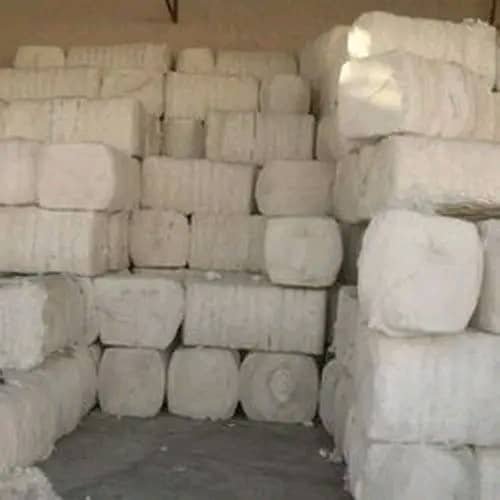
Raw Cotton
Product description
Raw Cotton Bales – Natural Fiber for Textile Processing
Raw cotton is supplied by AfriqAgro in compressed and baled form for commercial, industrial and textile-processing applications.
As a natural fiber commodity, cotton is widely used throughout the global textile and manufacturing industries. The Food and Agriculture Organization identifies cotton as the world’s most important natural fiber and notes its extensive use in clothing, home furnishings and other textile applications. FAOHome
Additionally, baling provides a practical format for handling larger commercial quantities. Depending on the specific batch, buyers can use the material for further cleaning, spinning, textile processing, manufacturing, distribution or resale.
Raw Cotton Overview
The raw cotton available through AfriqAgro is prepared for commercial supply in compressed bales.
This format can reduce the volume required for storage and simplify handling during wholesale transportation. As a result, it is particularly suitable for processors, textile businesses, manufacturers, traders and other bulk agricultural buyers.
Important product information should include:
- Product type
- Cotton condition
- Processing status
- Country of origin
- Bale weight
- Number of bales
- Fiber grade when available
- Fiber length when tested
- Micronaire when tested
- Moisture information when available
- Batch or lot identification
- Packaging details
Moreover, accurate batch information allows commercial buyers to compare available cotton more effectively.
For additional agricultural commodities and raw materials, browse the AfriqAgro marketplace.
Natural Cotton Fiber
Cotton is a natural plant fiber used extensively by the global textile industry.
According to FAO, demand for cotton is closely connected to worldwide demand for textile products. Furthermore, cotton is used extensively in apparel and home furnishings, with additional applications in nonwoven materials and related manufactured products. FAOHome
Consequently, raw cotton can serve as an important input material for a wide range of downstream businesses.
Potential commercial sectors include:
- Textile mills
- Spinning operations
- Fabric manufacturers
- Garment supply chains
- Home-furnishing manufacturers
- Nonwoven-product manufacturers
- Agricultural commodity traders
- Wholesale distributors
The exact suitability of an individual cotton batch, however, depends on its measured fiber characteristics and processing condition.
Pressed and Baled Raw Cotton
This raw cotton is supplied in compressed bale form.
Baling helps organize larger quantities of fiber into manageable commercial units. Therefore, buyers can more easily account for stock, arrange warehouse space and prepare quantities for transport.
Depending on the actual batch, each bale should be documented with information such as:
- Bale identification number
- Gross weight
- Net weight
- Country of origin
- Processing or ginning status
- Grade where available
- Packaging material
- Lot or shipment number
Furthermore, bale photographs should show the actual product whenever possible.
Avoid publishing one fixed bale weight unless every unit genuinely conforms to that specification.
Raw Cotton for Textile Processing
Textile processing is one of the principal commercial applications for cotton.
After appropriate preparation, cotton fiber can move through stages such as cleaning, carding, spinning, weaving or other manufacturing processes depending on the buyer’s operation and the condition of the supplied material.
However, AfriqAgro should avoid promising that every batch is suitable for every textile process.
Instead, commercial buyers should evaluate relevant fiber specifications before selecting cotton for a particular manufacturing requirement.
USDA cotton classification, for example, uses several measurable characteristics that affect cotton marketing and manufacturing decisions. These include fiber length, strength, length uniformity, micronaire, color and trash content. Agricultural Marketing Service
Cotton Fiber Quality Characteristics
Commercial cotton quality cannot be determined from appearance alone.
For that reason, useful specifications may include:
- Fiber length
- Fiber strength
- Length uniformity
- Micronaire
- Color grade
- Leaf or trash grade
- Moisture information
- Foreign-matter condition
USDA’s cotton-classing system evaluates properties including fiber length, strength, uniformity, micronaire, color and trash. These measurements help manufacturers select cotton appropriate for particular end products. Agricultural Marketing Service
Therefore, if you have professional classification or laboratory results for an AfriqAgro batch, adding those measurements can significantly improve the usefulness of the product page.
Raw Cotton Grade and Classification
A statement such as “high-grade cotton” should only be used when a recognized grading process supports it.
USDA notes that cotton classification data is used throughout cotton marketing and manufacturing, while internationally recognized cotton standards cover properties such as color, leaf grade, length, strength, uniformity and micronaire. Agricultural Marketing Service
Consequently, if your supplier gives you a grade, include:
- Name of grading system
- Grade or class
- Testing organization
- Date tested
- Batch or bale references
If no formal classification is available, simply describe the material accurately rather than assigning an unsupported premium grade.
Commercial and Industrial Applications
Raw cotton can enter numerous commercial supply chains after appropriate processing.
Potential applications include:
- Textile manufacturing
- Yarn production
- Fabric production
- Garment manufacturing
- Home furnishings
- Filling and padding applications
- Selected nonwoven applications
- Further cotton processing
- Commodity distribution
- Wholesale resale
FAO reports that cotton consumption is dominated by clothing, while home furnishings and nonwoven uses also represent parts of worldwide cotton utilization. FAOHome
Nevertheless, the suitability of an individual AfriqAgro batch for a particular application should be determined from its actual fiber specifications.
Wholesale and Bulk Raw Cotton Supply
AfriqAgro can present this product for wholesale and bulk raw cotton requirements.
Depending on available inventory, commercial buyers may inquire about:
- Individual bales
- Multiple-bale orders
- Wholesale quantities
- Commercial processing quantities
- Distributor requirements
- Export enquiries
- Recurring supply requirements
Moreover, quantity-based listings should identify the actual unit being priced.
For example, make it clear whether the displayed WooCommerce price refers to:
1 kilogram
1 bale
100 kilograms
or another specific quantity.
That prevents ambiguity and makes the listing more useful for international buyers.
Raw Cotton Origin and Traceability
Cotton is produced commercially across many parts of the world.
However, the country where cotton grows naturally or commercially should not be confused with the origin of a particular AfriqAgro batch.
Therefore, use:
Country of origin: Actual documented country
For example, if the cotton was produced and sourced in Cameroon and your records confirm that fact, list:
Country of origin: Cameroon
If another batch originates elsewhere, update the specification accordingly.
In addition, useful traceability information can include:
- Producer or supplier reference
- Production region
- Harvest season
- Ginning location where applicable
- Batch number
- Bale numbers
- Packing date
Clear origin information can improve both commercial transparency and buyer confidence.
Packaging and Bale Condition
The raw cotton is supplied in compressed packaging designed for bulk handling and transportation.
Before publishing detailed packaging claims, however, confirm the actual construction of the bale.
Useful information can include:
- Bale covering material
- Bale dimensions
- Net bale weight
- Compression method
- Strapping type
- Number of bales
- Total shipment weight
Additionally, commercial photographs should show the bale condition accurately.
Avoid claiming packaging is waterproof, contamination proof or suitable for indefinite outdoor storage unless the packaging specification actually supports those statements.
Storage and Handling
Cotton should be kept under suitable storage conditions designed to limit unnecessary exposure to moisture, contamination and other conditions that could affect fiber quality.
A practical general statement is:
Store cotton bales in a clean, dry and properly ventilated location, protected from excessive moisture and contamination.
Furthermore, individual bales should remain identifiable through labels or bale numbers whenever commercial traceability is required.
Any more specific storage instructions should be based on the supplier, warehouse or applicable industry requirements.
Raw Cotton Technical Summary
Overall, raw cotton is a commercially important natural fiber material used throughout textile and manufacturing supply chains.
AfriqAgro supplies the material in pressed and baled form to support practical handling, storage and commercial transportation.
Moreover, buyers evaluating cotton for processing should consider characteristics beyond appearance. Fiber length, strength, uniformity, micronaire, color and trash are among the properties commonly used when professionally classifying cotton. Agricultural Marketing Service
Therefore, adding verified batch-specific measurements whenever available can make an AfriqAgro raw cotton listing substantially more valuable to professional buyers.
Raw Cotton Key Specifications
- Product: Raw cotton
- Commodity type: Natural agricultural fiber
- Plant genus: Gossypium
- Product form: Compressed/baled cotton
- Processing status: State actual batch condition
- Ginning status: State whether ginned or unginned
- Fiber type: State actual variety/species when documented
- Bale weight: Enter actual weight
- Bale dimensions: Enter when available
- Fiber length: Enter verified measurement when available
- Fiber strength: Enter verified measurement when available
- Micronaire: Enter verified result when available
- Length uniformity: Enter verified result when available
- Color grade: Enter verified grade when available
- Trash/leaf grade: Enter verified grade when available
- Country of origin: Enter actual documented origin
- Harvest season: Enter when available
- Batch/lot number: Recommended
- Commercial quantities: Wholesale and bulk supply
- Packaging: Compressed bale
- Storage: Clean, dry and protected from excessive moisture
- Primary commercial use: Textile and industrial processing
Give your Review:
Related products
Raw Cotton
20 500 CFA
Raw cotton supplied in compressed bales for textile processing, manufacturing, resale and other commercial applications. Properly packed for easier handling, storage and transport, with wholesale and bulk quantities available to buyers worldwide.